Jun Porcelain
Introduction
Jun porcelain, one of the top five renowned Chinese porcelains, has its roots in Yuzhou city, located in Henan province, Central China. The craft dates back to the Tang Dynasty (618-907) and reached its zenith during the Song Dynasty (960-1279). Over the centuries, Jun porcelain has been preserved and innovated, continuing to thrive as a testament to China's rich artistic heritage.
Historical Background
The art of Jun porcelain began during the Tang Dynasty but truly flourished during the Song Dynasty. It was during this period that the distinct characteristics of Jun porcelain were fully developed. As one of China's top five porcelains, Jun porcelain gained notoriety for its unique glaze and vibrant colors. Passed down through generations, the craftsmanship associated with Jun porcelain has maintained its relevance through a combination of traditional techniques and modern innovation.
Making Technique
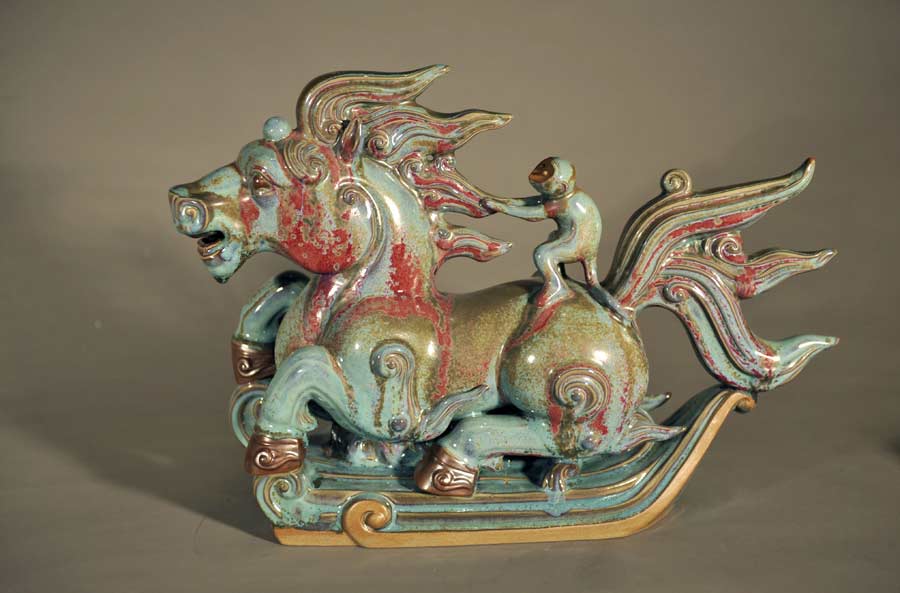
Jun porcelain is particularly distinguished by its glaze, which utilizes copper oxides as colorants. The process of achieving its renowned copper red glaze involves precise control of the kiln's flame. This intricate technique differs significantly from the simpler green and white porcelains of earlier times. The firing process, executed in wood-fired kilns, involves coating pottery with glaze and subjecting it to high temperatures. The resulting color transformations are both unpredictable and enchanting, providing a kaleidoscope of hues influenced by variations in kiln temperature and humidity.
The Artisanship of Jun Porcelain
The town of Shenhou has become a gathering point for a growing community of artisans dedicated to the study, training, and entrepreneurial endeavors centered around Jun porcelain. These artisans are committed to preserving the craft and ensuring its continuing prosperity. The allure of Jun porcelain lies in its vibrant colors, which symbolize the vitality of each piece. The unpredictability of the colors, as they transform through the firing process, adds to the charm and beauty of Jun porcelain.
Modern Development
In recent years, efforts have been made to blend traditional Jun porcelain craftsmanship with modern technological advancements. The craft has transitioned from a strictly teacher-to-student model to one that is more inclusive and educational, allowing for a broader dissemination of knowledge and techniques. The integration of cultural heritage with contemporary practices ensures that Jun porcelain remains a dynamic and evolving art form.
The Shenhou old town, situated in Shenhou township, is not only a scenic spot but also a thriving community of Jun porcelain artisans. These craftsmen continue to push the boundaries of their craft while engaging in cultural exchanges and collaborations. Through these efforts, Jun porcelain maintains its cultural significance and continues to inspire new generations of artisans and enthusiasts.








